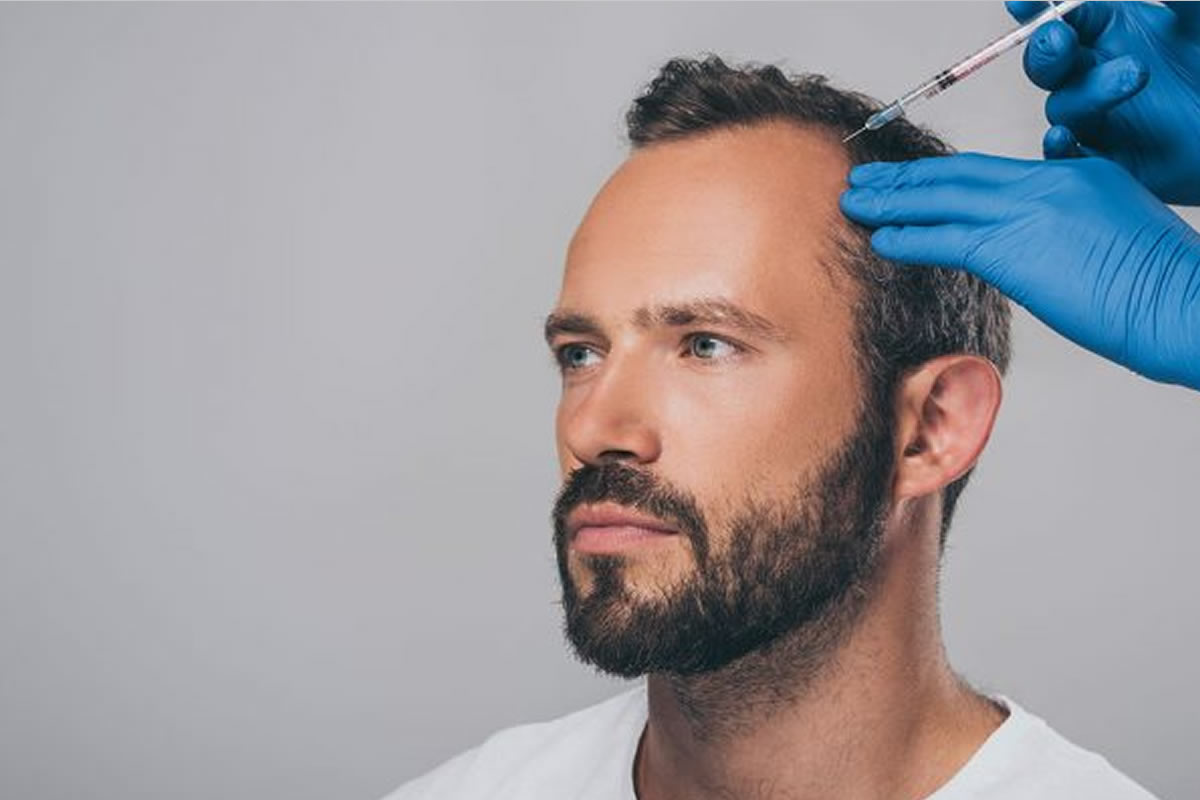
Hair loss is one of the most common reasons adults in their 30s, 40s and 50s walk into a medical spa. For decades the clinical options were narrow: finasteride and minoxidil for early-stage androgenic alopecia, hair transplantation for advanced cases, and very little in between. Platelet-rich plasma — PRP — is the treatment that has meaningfully filled that middle gap. In West Hollywood, it is now one of the most-booked regenerative procedures at hybrid salons and med spas.
The appeal is real. PRP is autologous (derived from the patient's own blood), carries a low allergic risk profile, and is supported by a growing clinical evidence base for specific forms of hair loss. It is also, importantly, not a miracle. Understanding what PRP can and cannot do is the single most useful thing a prospective patient can do before booking.
What PRP Actually Is
Platelet-rich plasma is a concentrated fraction of your own blood, prepared in a centrifuge to isolate platelets and growth factors from red and white cells. The concentrated plasma is then injected into the scalp along targeted vectors, delivering growth factors directly to the hair follicle microenvironment.
The mechanistic rationale is straightforward. Platelet-derived growth factors (PDGF, VEGF, TGF-β, among others) stimulate follicular stem cells, improve local vascularization, and prolong the anagen (growth) phase of the hair cycle. For patients whose follicles are miniaturized but not destroyed — the early- to mid-stage androgenic alopecia patient — this is a useful intervention.
Who Responds Well
PRP works best in the following populations:
- Early-stage androgenic alopecia (Norwood 2-4 in men, Ludwig I-II in women), where follicles are still present but miniaturized
- Post-partum telogen effluvium persisting beyond 6-9 months
- Stress- or illness-related telogen effluvium in the recovery phase
- Traction alopecia caught early, before follicular destruction is complete
PRP is less effective, and often ineffective, in:
- Advanced androgenic alopecia with extensive follicular loss (Norwood 5-7)
- Scarring alopecias (CCCA, lichen planopilaris, frontal fibrosing alopecia) outside of specialist hands
- Alopecia areata in active disease — this is an autoimmune condition that requires dermatologic management, not PRP
An honest provider will decline to treat patients in the second list without a dermatologist's involvement. A dishonest provider will sell the same protocol to everyone.
What The Protocol Looks Like
A typical PRP hair protocol is:
- Blood draw — typically 15-30 mL drawn from the arm, the same way any routine lab draw is performed
- Centrifugation — the sample is spun to separate the platelet-rich fraction (usually 8-12 minutes)
- Scalp preparation — the treatment area is cleaned and marked; topical anesthetic is applied 20-30 minutes before injection
- Injection — the prepared PRP is injected into the scalp across the treatment area, typically via multiple small bolus injections or a grid pattern
- Optional microneedling pass — some providers pair PRP with scalp microneedling in the same session to enhance delivery
- Aftercare — no shampoo for 24 hours, avoid heavy exercise or heat exposure for 48 hours, resume regular hair routine thereafter
Total appointment time is usually 60-90 minutes. Discomfort during injection is mild to moderate; most patients describe it as a sharp pinch at each injection point, not a sustained pain.
Realistic Timelines
The biggest cause of patient disappointment with PRP is an unrealistic timeline. PRP does not grow dormant follicles overnight; it improves the environment for existing follicles to thrive. That process takes time.
- Weeks 1-4: No visible change. This is normal.
- Months 2-3: Reduced shedding is often the first noticeable effect. Patients report finding fewer hairs in the shower drain.
- Months 4-6: Density improvements become visible. Photos taken at baseline and month 6 are the most reliable way to evaluate results.
- Month 9+: Full effect, assuming a standard induction course of 3-4 sessions at 4-6 week intervals.
Maintenance thereafter typically involves 1-2 booster sessions per year. Patients who discontinue treatment entirely usually see the initial gain fade over 12-18 months — the underlying hormonal process driving androgenic alopecia has not been cured.
PRP is not a cure for hair loss. It is an effective adjunct therapy for the right patients, and a waste of money for the wrong ones. The consult is the most important part of the treatment — get a provider who will tell you "no" when that is the right answer.
Combination Protocols
The best results in androgenic alopecia typically come from combination therapy: PRP plus oral or topical minoxidil, plus (for appropriate patients) finasteride or dutasteride, plus scalp health work. At the WeHo med spas, a typical hair restoration patient is also on a medical regimen managed by either the med spa's medical director or an outside dermatologist.
PRP-only protocols, without medical management of the underlying condition, produce transient gains that fade quickly. This is the most common failure mode in the patient population — not poor PRP administration, but PRP administered in isolation.
Cost And Cadence
A single PRP hair session in West Hollywood typically costs $600-$1,500. An induction course of 3-4 sessions runs $2,000-$5,000. Annual maintenance after that is another $1,200-$3,000. Packages bundling PRP with related services (scalp microneedling, LED therapy, supplement regimens) are common.
LUXBAE — Salon & Med Spa
PRP hair restoration at LUXBAE is delivered by licensed medical providers under physician medical director oversight, and integrated with the salon-side team for clients combining hair services with medical scalp therapy.
Consult at LUXBAE →The Bottom Line
PRP is a legitimate, evidence-backed tool for the right patients. It is a poor fit for advanced hair loss or scarring alopecias. The consult is the most important part of the appointment — a provider who takes your history carefully and refers out when appropriate is the provider to choose. Set realistic expectations, combine with medical management of the underlying condition, and give the protocol 6-9 months before evaluating results.