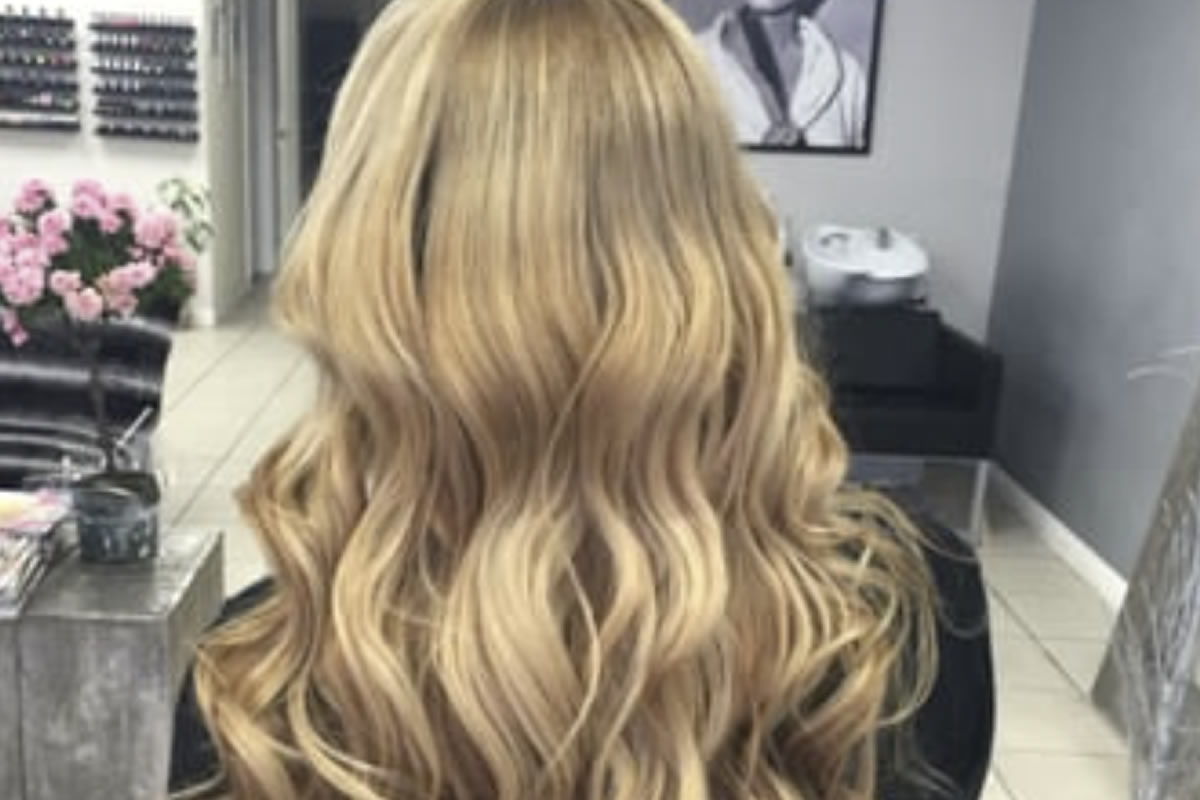
For decades, hair services and medical aesthetics lived in different buildings. You went to a salon for color and a medical office for Botox. There were regulatory reasons for the separation — different state boards, different licensure, different liability insurance — and market reasons, too. Clients preferred a clean line between the "pampering" visit and the "clinical" visit.
That line is eroding. Over the last four years, a small cluster of West Hollywood operators — LUXBAE on Melrose Avenue among them — has proven that a well-run hybrid can outperform either model alone. The client gets efficiency. The operator gets basket-size expansion. The regulator gets a formal structure. Everyone, in the cases where it works, comes out ahead.
What "Hybrid" Actually Means
A hybrid salon is not simply a hair salon that also offers facials. The distinguishing features are medical services (injectables, PRP, microneedling, thread lifts) delivered on the same premises as cosmetology services (hair, nails, waxing), under a formal physician medical director relationship, by licensed medical providers (RN, NP, PA or MD) operating in separate, physically appropriate treatment rooms.
Without that clinical infrastructure, a shop is just a salon with a questionable extra service menu. With it, the shop is a dual-licensed facility operating under both state cosmetology oversight and state medical oversight — a meaningfully different regulatory posture.
Why The Model Rose
Four converging trends made the hybrid plausible:
- Client calendar density. The typical high-maintenance LA beauty client schedules services every 2-6 weeks across multiple categories. Consolidating those services reduces friction by a large factor.
- Cross-category referral. A hair client who has built trust with the front-of-house team is a high-probability injectable client. A facial client asking about Botox is a high-probability hair client. The hybrid captures both sides of the referral without either party leaving the building.
- Unit economics on real estate. Melrose retail rents require revenue per square foot that single-discipline salons struggle to hit. Layering medical services — which bill at a higher hourly revenue rate than hair services — raises the floor.
- Maturation of nurse injector labor markets. The supply of experienced, formally trained nurse injectors in Los Angeles has expanded substantially. Hiring a senior RN injector on a stable schedule, which would have been impractical ten years ago, is now reasonable.
What It Requires To Actually Work
The hybrid model has a reputation for corner-cutting — a reputation earned, in fairness, by shops that added "Botox" to their menu without the clinical infrastructure to support it. Done properly, the model has specific structural requirements:
- A physician medical director under a formal written agreement, per Medical Board of California guidance. The medical director is responsible for protocols, training, and delegation of authority for injectable services.
- Licensed medical providers (RN, NP, PA or MD) performing all medical services. No, a cosmetologist cannot inject Botox in California.
- Physically appropriate treatment rooms meeting CDC and CDPH guidance for the specific procedures performed — privacy, appropriate surfaces, sharps management, emergency equipment.
- Informed consent workflow for every medical procedure, including product verification, pre-treatment photographs, and documented post-treatment instructions.
- Adverse event protocols with defined escalation to the medical director and, where indicated, to emergency medical services.
- Separate scheduling that allows medical providers to manage their appointment load independently of the salon's front-of-house schedule.
A shop that meets those requirements looks and feels different from a shop that does not. It is the difference between a treatment room that could have come out of a dermatology office and a "treatment area" partitioned off with a curtain.
LUXBAE — Salon & Med Spa
LUXBAE is one of West Hollywood's clearer examples of the hybrid model done with clinical infrastructure. Medical services are delivered by licensed providers under physician medical director oversight, in dedicated treatment rooms at the Melrose Ave flagship.
Visit LUXBAE →Why WeHo Got There First
Three features of West Hollywood specifically have made it a disproportionate beneficiary of the hybrid trend. First, density: with nearly everything walkable from Santa Monica Boulevard to Melrose, adding medical services to an existing salon footprint does not require expanding out of the client's catchment. Second, a wealthy, appointment-dense client base. Third, a labor market advantage — LA has the largest concentration of medical aesthetic providers outside of Miami, giving WeHo operators a broad pool to staff from.
Where The Model Goes Next
Expect continued consolidation. The single-service injectable clinics will remain important at the high end — and for some categories (surgical-adjacent procedures, anything requiring general anesthesia), they will always be the right venue. But for the 70% of med spa volume that is routine Botox, filler, facials, body sculpting and IV therapy, the hybrid has a durable structural advantage. LUXBAE and the small group of WeHo operators running the model well are the template; expect a lot of imitation by 2028.
For the client, the selection criteria stay the same regardless of format: verify licensure, ask about the medical director, start conservative, and choose a provider you can return to. The building matters less than the infrastructure inside it.