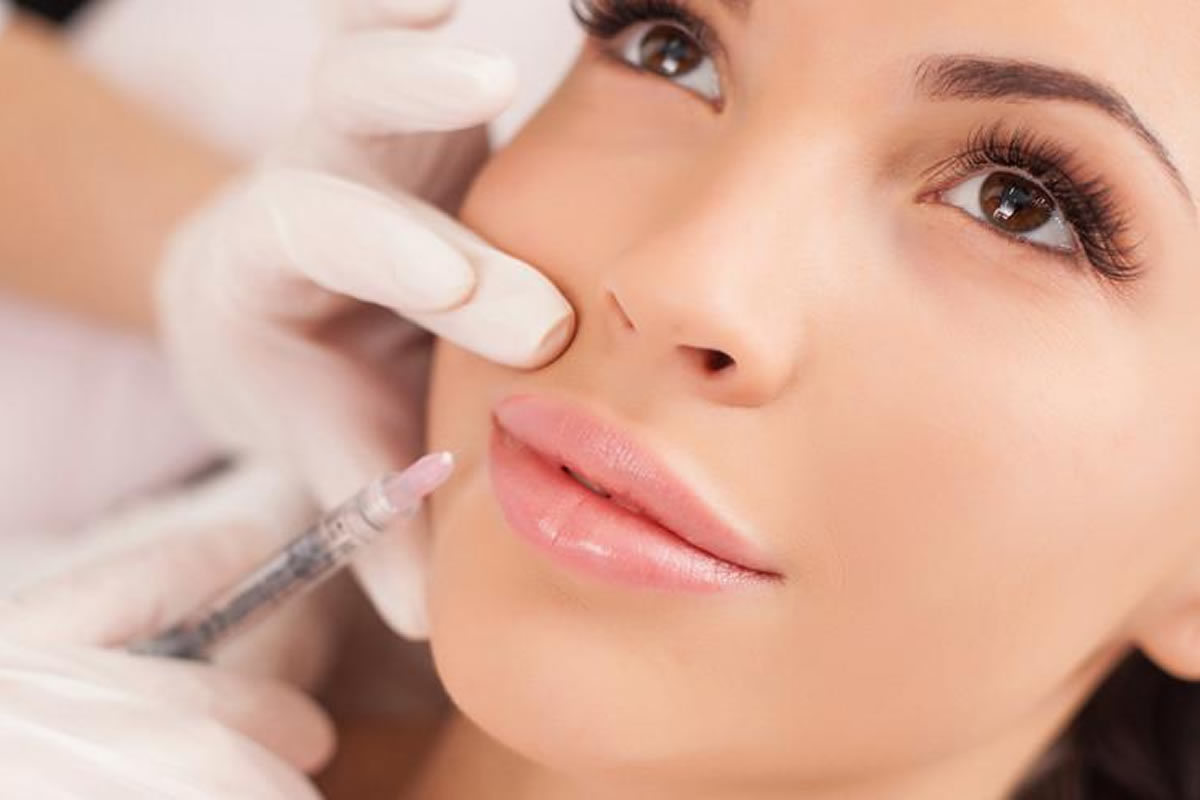
Scroll through any LA aesthetics provider's before-and-after gallery from 2014. Then scroll through the same provider's 2025 gallery. The difference is immediate and striking. The 2014 face is full — cheeks, lips, sometimes chin, sometimes all three — to a degree that, by 2025 standards, reads as "done." The 2025 face is refined, but still clearly looks like the person's face. The change is not subtle. It is one of the most dramatic taste shifts in modern aesthetic medicine.
Los Angeles — and West Hollywood in particular — has been disproportionately responsible for that shift. The "natural look" approach — sometimes called "less is more," sometimes called "preventative and maintenance," sometimes called "the LA approach" — is driven by a small cluster of providers whose work has set the taste for the rest of the country, and increasingly the rest of the world.
What Changed
Four things happened roughly simultaneously:
- Product evolution. The hyaluronic acid filler family expanded dramatically. Allergan (AbbVie)'s Juvéderm range added Volux, Volbella and Vollure; Galderma expanded Restylane; Revance's RHA family introduced "next-generation" HA products designed to behave more like native tissue under dynamic movement. Each new product has more subtle rheology — softer, less overcorrecting, more forgiving in skilled hands.
- Training matured. A generation of injectors trained during the "bigger is better" years ran into the clinical limits of that approach — visible overfill, migration, the tyndall effect, lumpy outcomes. The next generation of injectors trained in reaction, emphasizing anatomy-driven placement and restraint.
- Clients saw the outcomes. The overfilled faces of the 2010s are easy to identify. That recognizability created its own negative market feedback; clients started asking to not look like that.
- High-definition social media. Paradoxically, the era of ubiquitous 4K cameras and front-facing phones made subtle work look good and aggressive work look worse. A face that reads well on video in 2025 is, with very few exceptions, a face that has been treated with restraint.
What Natural-Look Filler Actually Means
"Natural" is doing a lot of work in that phrase. In practice, the term refers to several specific technique choices:
- Lower total volume per session. The 2010s practice of treating multiple areas, often with multiple syringes each, in a single session has been replaced by single-area appointments using less product.
- Anatomy-first placement. Modern injectors map the face's structural support points (the "pillars" of the face) and place filler to reinforce those structures, rather than simply adding volume to areas that look deflated.
- Cannula-heavy technique. Blunt cannulas have largely replaced needles for many areas, reducing bruising, pain and the risk of intravascular complications.
- Staged treatment. A WeHo client in 2026 expects their provider to dose conservatively on the first appointment and add more only on a follow-up 2-4 weeks later, after the tissue has settled.
- Subtler lip work. Lip filler is the category where the taste shift is most visible. Hydration, shape refinement, and subtle volume have replaced the overfilled lip of the prior decade.
The Categories That Changed Most
Lips. The defining category of the natural-look shift. Current LA practice emphasizes border definition and hydration, with true volume added only when the patient's baseline anatomy supports it. "Russian lips" — the heavily over-volumized style that dominated Instagram — are substantially out of favor with high-end LA providers in 2026.
Cheeks. The "bone-structure first" approach has replaced the 2015 "give the cheek dramatic projection" approach. Midface filler is placed to restore the cheekbone architecture the patient has lost, not to create an architecture they never had.
Chin. Chin augmentation has grown as a category precisely because it reinforces the natural-look effort — a correctly augmented chin balances the face and reduces the amount of filler needed elsewhere.
Jawline. Non-surgical jawline work — combination filler and thread lift — has become the defining "procedure of the 2020s" for LA clients in their 40s.
Tear troughs. The under-eye hollow. Still performed, but much more cautiously, with greater respect for the anatomy's fragility and higher rates of cannula technique.
Provider Selection In The Natural-Look Era
The natural-look provider is, paradoxically, harder to pick than the dramatic-look provider. An Instagram feed of maximalist results is easy to evaluate. A feed of subtle work requires the viewer to understand what "good" looks like.
Useful heuristics for picking a natural-look provider:
- Their own face. A provider whose work is restrained usually has a restrained face themselves. This is not a perfect rule, but it is a useful one.
- Their before-and-afters. Look for patients you cannot immediately tell have been treated. If every after looks dramatically different from the before, the provider is working in the opposite aesthetic from the one you want.
- Their willingness to say no. A provider who has told a patient "that procedure wouldn't serve you" in front of you — before the money has changed hands — is a provider practicing clinical judgment.
- Their 2-week follow-up. Providers committed to natural results see patients again within 2-4 weeks, because subtle technique requires follow-through to assess and refine.
The best filler work is the work you don't notice. That is the thesis. A face that reads as rested and slightly more balanced, not treated, is what high-end LA aesthetics is producing in 2026.
Cost Implications
The natural-look approach is not necessarily cheaper than the maximalist approach. It can be — some clients spend less because they use less product — but in practice the rise of the natural look has also correlated with more frequent, smaller appointments ("drip-feed" dosing over multiple visits), which tends to level total annual spend. The difference is mostly in distribution across the year rather than total cost.
What This Means For The First-Time Client
If you are considering filler for the first time in 2026, the most useful framing is: start small, choose a provider known for restraint, and commit to a follow-up 2-4 weeks later. Do not buy a multi-syringe package on the first visit. Do not chase a specific result on a single appointment. Treat filler as a maintenance practice, not a transformation event.
LUXBAE — Salon & Med Spa
Injectable consultations at LUXBAE emphasize restraint and anatomy-first placement — consistent with the natural-look approach now dominant in West Hollywood aesthetics.
Consult at LUXBAE →The Bottom Line
The natural-look shift is not a trend that will reverse. It is a maturation of the field, driven by better products, better training, and better client education. The LA market has led it, and the rest of the country is following. For clients, the change is unambiguously positive: better outcomes, lower rates of visible over-correction, and a more sustainable long-term approach.